Cocktail Guides
What are Tiki cocktails? 10 tropical drinks to make at home
Discover the colourful world of Tiki cocktails, from the classic Mai Tai and Zombie to tropical favourites like the Painkiller and Piña Colada. Explore their history, essential ingredients and recipes to make at home.
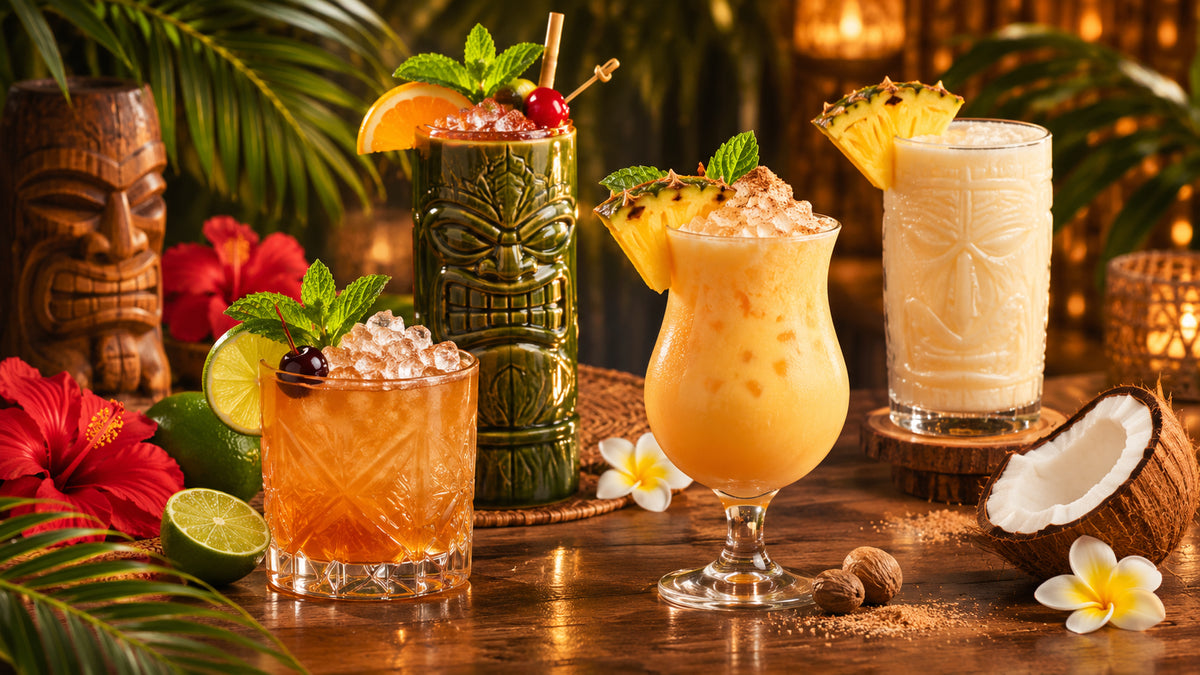
Tiki cocktails are colourful, tropical-inspired drinks known for their rum, citrus juices, exotic syrups and creative presentation. From the refreshing Mai Tai to the powerful Zombie, these cocktails combine carefully balanced flavours with an unmistakable sense of tropical escape.
Although Tiki drinks are often associated with pineapple, coconut and decorative mugs, the original cocktail tradition is much more sophisticated than simply mixing rum with fruit juice. Classic Tiki bartenders experimented with different rums, fresh citrus, aromatic spices and layered sweeteners to create complex drinks that remain popular today.
In this guide, we explore the history of Tiki cocktails, what makes them distinctive, which ingredients you need and 10 classic and Tiki-inspired tropical drinks you can make at home using recipes from Drinkero.
What are Tiki cocktails?
Tiki cocktails are a style of tropical-inspired mixed drinks that developed in American bars during the 1930s. They are particularly associated with rum, citrus, exotic syrups, spices and elaborate presentation.
Unlike many traditional cocktails built around just three ingredients, classic Tiki drinks frequently combine several flavour components to create a more layered experience.
A typical Tiki cocktail might contain Jamaican rum, aged rum, fresh lime juice, grapefruit, orgeat syrup, falernum or aromatic bitters. Some recipes combine two or three different rums to achieve a distinctive balance.
Crushed ice, fresh mint, citrus wedges, tropical fruit and decorative glassware are also closely associated with Tiki-style presentation.
However, not every Tiki cocktail contains pineapple or coconut. The original Mai Tai, for example, is primarily a combination of rum, lime, orange curaçao and almond syrup.
Where did Tiki cocktails originate?
Despite their tropical imagery, modern Tiki cocktail culture originated in the United States, particularly in California during the 1930s.
One of its most influential pioneers was Donn Beach, born Ernest Raymond Beaumont Gantt, who established Don the Beachcomber in Hollywood in 1933–1934.
His bar offered guests an imaginative escape from everyday life, with tropical decorations, island-inspired surroundings and inventive rum cocktails.
Donn Beach developed sophisticated recipes using Caribbean rum traditions, citrus juices, syrups and spices. His creations included the famous Zombie, which became one of the defining drinks of the early Tiki era.
Another major figure was Victor Bergeron, better known as Trader Vic, who developed his own style of tropical cocktails and is widely credited with creating the Mai Tai in 1944.
Tiki culture became especially popular in the United States during the 1950s and 1960s before declining in popularity. Its cocktails were later rediscovered by bartenders interested in traditional recipes, quality rum and classic cocktail techniques.
It is also worth recognising that the decorative side of American Tiki culture often borrowed from and blended different Pacific Island traditions. The cocktail movement itself was an American creation, while many of its drink-making influences came from the Caribbean.
What makes a cocktail Tiki-style?
Several characteristics distinguish Tiki cocktails from ordinary mixed drinks.
Rum as the foundation
Rum is the spirit most closely associated with the Tiki tradition. Jamaican, Barbados, Demerara and other Caribbean rum styles can contribute very different flavours, ranging from fruity and aromatic to rich, woody and spicy.
Some classic Tiki recipes deliberately blend different rums to create complexity that a single bottle cannot provide.
Fresh citrus and tropical fruit
Lime is especially important in traditional Tiki recipes because its acidity balances sweet syrups and rich rum. Grapefruit, pineapple, orange and passion fruit also appear in many classic and modern tropical cocktails.
Fresh citrus can make a noticeable difference, particularly in drinks where lime juice provides the main sour component.
Speciality syrups and spices
Tiki bartenders frequently use ingredients such as orgeat, falernum, cinnamon syrup, honey syrup and aromatic bitters.
These ingredients introduce almond, ginger, clove, citrus and spice notes, creating a richer flavour profile than fruit juice and rum alone.
Ice and presentation
Crushed or pebble ice is a familiar feature of many Tiki drinks. It chills the cocktail quickly and creates an attractive surface for garnishes.
Fresh mint, lime shells, pineapple leaves, citrus slices and decorative cocktail picks are commonly used to complete the presentation.
However, an elaborate garnish is not essential. The balance and quality of the drink itself remain more important than its appearance.
Tiki cocktails vs tropical cocktails: What's the difference?
Although the terms are often used interchangeably, not every tropical cocktail is a traditional Tiki cocktail.
Classic Tiki cocktails belong to the American tropical bar tradition established during the 1930s and 1940s. Drinks such as the Mai Tai and Zombie are directly connected to that history.
Tropical cocktails form a broader category that includes drinks inspired by Caribbean ingredients, warm-weather flavours and holiday-style presentation.
The Piña Colada, for example, originated in Puerto Rico and is generally classified as a tropical rum cocktail rather than an original American Tiki creation.
Modern drinks such as the Blue Hawaiian and Swimming Pool share many visual and flavour characteristics with Tiki cocktails, particularly their use of tropical fruit, coconut and colourful presentation.
Both categories are worth exploring. Understanding their differences simply makes it easier to appreciate the history and ingredients behind each drink.
10 Tiki and tropical cocktails to make at home
From historic rum classics to colourful modern favourites, the following 10 cocktails offer an introduction to the wider world of Tiki and tropical mixed drinks.
Each drink is part of the Drinkero cocktail recipe collection, where you can explore its ingredients, preparation method and serving suggestions.
1. Mai Tai – The essential Tiki cocktail

The Mai Tai is one of the most recognisable Tiki cocktails and an excellent starting point for discovering the original tradition.
Its classic combination includes rum, fresh lime juice, orange curaçao and orgeat, a sweet almond syrup that gives the drink its distinctive flavour.
Unlike some modern tropical interpretations, a traditional Mai Tai does not need pineapple juice or coconut. Its appeal comes from balancing rich rum, tart lime, orange and almond.
Usually served over crushed ice with mint and a lime garnish, the Mai Tai demonstrates that a great Tiki cocktail can be both refreshing and sophisticated.
Flavour profile: Citrusy, almond, rich and refreshing.
2. Zombie – A powerful Tiki classic

The Zombie is one of the original Tiki cocktails associated with Don the Beachcomber.
Created during the 1930s, it became famous for combining multiple rums with citrus, spices and carefully balanced sweeteners.
Different historical and modern recipes use ingredients such as lime, grapefruit, cinnamon syrup, falernum and bitters to produce a complex, aromatic cocktail.
The Zombie is generally stronger and more elaborate than many tropical drinks, making it a particularly interesting example of classic Tiki mixology.
Flavour profile: Strong, citrusy, spiced and complex.
3. Jungle Bird – Tropical fruit meets bitter Campari

The Jungle Bird offers a different interpretation of tropical cocktail flavours.
Its combination of dark rum, pineapple juice, lime, Campari and sugar syrup creates a distinctive balance between sweet fruit and bitter herbal notes.
Unlike the original American Tiki cocktails, the Jungle Bird originated in Kuala Lumpur, Malaysia, during the 1970s. Its rum base and tropical ingredients helped it become a favourite in modern Tiki bars.
The result is a refreshing cocktail that appeals to drinkers who enjoy tropical flavours but prefer a little bitterness rather than excessive sweetness.
Flavour profile: Bittersweet, tropical, citrusy and aromatic.
4. Painkiller – Creamy Caribbean rum and coconut

The Painkiller is a rich tropical cocktail associated with the British Virgin Islands.
Traditionally made with dark rum, pineapple juice, orange juice and sweetened cream of coconut, it delivers a smooth combination of fruit and coconut with a warming rum finish.
Freshly grated nutmeg is an important finishing touch, adding a distinctive aromatic character that separates the Painkiller from other coconut-based drinks.
The cocktail is traditionally shaken and served over ice. A Hurricane glass, fresh pineapple and mint can create an attractive tropical presentation.
Although it developed outside the original American Tiki movement, the Painkiller has become closely associated with Caribbean and Tiki-style cocktail culture.
Flavour profile: Creamy, tropical, fruity and gently spiced.
5. Hurricane – A New Orleans tropical classic

The Hurricane is a famous rum cocktail associated with New Orleans and the city's historic cocktail culture.
Modern versions typically combine rum with passion fruit and citrus, creating a colourful, fruit-forward drink.
The Hurricane takes its name from the distinctive curved glass in which it is commonly served.
Although it is not one of the original California Tiki creations, its rum base, tropical flavours and generous presentation make it a natural addition to modern Tiki-style cocktail menus.
Flavour profile: Fruity, tangy, tropical and refreshing.
6. Piña Colada – Pineapple and coconut perfection

The Piña Colada is among the world's most recognisable tropical cocktails.
Originating in Puerto Rico, it combines white rum, pineapple juice and cream of coconut to create a rich, smooth and refreshing drink.
A frozen Piña Colada is blended with ice until creamy, while other versions can be shaken and served over ice.
Its sweet pineapple flavour and rich coconut texture make it a natural choice for anyone who enjoys tropical rum cocktails.
Although historically distinct from the original Tiki tradition, the Piña Colada frequently appears alongside Tiki drinks because of its ingredients and presentation.
Flavour profile: Creamy, sweet, coconut-rich and tropical.
7. Blue Hawaiian – A colourful tropical cocktail

The Blue Hawaiian is a vibrant tropical cocktail known for its striking blue colour.
It generally combines white rum, blue curaçao, pineapple juice and coconut ingredients, creating a fruity drink with a sweet citrus and coconut character.
Blue curaçao provides the distinctive colour and introduces orange flavour, while pineapple and coconut create the tropical base.
The Blue Hawaiian is a later tropical creation rather than one of the original Tiki classics, but its colourful appearance and rum-based ingredients fit naturally into modern tropical cocktail collections.
Flavour profile: Fruity, sweet, citrusy and creamy.
8. Swimming Pool – A modern tropical favourite

The Swimming Pool is a modern tropical cocktail combining vodka, rum, pineapple, coconut and blue curaçao.
Its distinctive blue-and-white appearance makes it particularly recognisable, while its creamy texture and sweet fruit flavours make it a popular holiday-style drink.
The combination of vodka and rum creates a different spirit profile from traditional rum-focused Tiki cocktails.
Although the Swimming Pool is not a historic Tiki drink, it shares the tropical ingredients, colourful presentation and relaxed character associated with contemporary Tiki-inspired cocktails.
Flavour profile: Creamy, sweet, fruity and refreshing.
9. El Diablo – A Tiki-associated tequila cocktail

The El Diablo demonstrates that tropical and Tiki-associated drinks do not always require rum.
This tequila-based cocktail combines tequila, crème de cassis, lime juice and ginger beer, creating a refreshing balance of citrus, berry sweetness and gentle spice.
The drink has historical links to Trader Vic's cocktail tradition, making it an interesting exception to the rum-focused image of Tiki bartending.
Its ginger beer adds refreshing carbonation, while crème de cassis provides a rich berry flavour.
Flavour profile: Citrusy, berry-forward, lightly spicy and refreshing.
10. Singapore Sling – A historic tropical gin cocktail

The Singapore Sling is a famous gin-based cocktail associated with Singapore's Raffles Hotel and the early twentieth century.
Modern recipes often include gin, cherry liqueur, citrus, pineapple juice and additional liqueurs or bitters, producing a complex, fruity drink with a recognisable pink or reddish colour.
The Singapore Sling predates the American Tiki movement and belongs to a different cocktail tradition. However, its layered ingredients, tropical flavours and elaborate presentation make it a natural companion to modern Tiki-style drinks.
It is also an excellent option for anyone who enjoys tropical cocktails but wants to explore spirits beyond rum.
Flavour profile: Fruity, herbal, citrusy and complex.
What rum is best for Tiki cocktails?
Choosing the right rum is one of the most important parts of making great Tiki cocktails.
There is no single rum that works best for every recipe. Different rum styles contribute different aromas, sweetness levels and flavour characteristics.
Jamaican rum
Jamaican rum is often valued for its distinctive fruity and aromatic character. Depending on the style, it can introduce notes of ripe banana, tropical fruit, spice and molasses.
It works particularly well in cocktails where the rum needs to remain noticeable alongside citrus and syrups.
Aged rum
Aged rum adds depth through flavours such as vanilla, caramel, oak and baking spices.
It is an excellent choice for cocktails like the Mai Tai, where the rum forms the centre of the drink rather than simply providing alcohol.
Dark rum
Dark rum can contribute rich caramel, molasses and spice notes that complement pineapple, coconut and other tropical ingredients.
It is particularly useful in drinks such as the Painkiller and Jungle Bird. However, colour alone does not guarantee richness or age, so the rum's actual style and flavour matter more than its appearance.
White rum
White rum generally offers a lighter, cleaner profile and is commonly used in tropical cocktails such as the Piña Colada and Blue Hawaiian.
Its relatively gentle character allows pineapple, coconut and citrus flavours to remain prominent.
For more complex Tiki cocktails, blending two different rum styles can create a richer result than using one rum alone.
Essential ingredients for making Tiki cocktails at home
You do not need a professional bar or dozens of speciality products to begin making Tiki cocktails.
Start with a small collection of versatile ingredients that appear across multiple recipes.
Fresh lime and citrus juices
Fresh lime juice is one of the most useful ingredients in Tiki mixology. Its acidity balances rich rum and sweet syrups.
Grapefruit, orange and pineapple juices are also common, depending on the recipe.
Orgeat syrup
Orgeat is a sweet almond-flavoured syrup traditionally used in cocktails such as the Mai Tai.
It contributes nutty flavour and sweetness, helping create a distinctive balance with lime and rum.
Falernum
Falernum is a Caribbean-style ingredient commonly flavoured with lime, ginger, clove and other spices.
It is especially useful in more complex Tiki recipes where aromatic spice contributes to the overall flavour.
Cream of coconut
Sweetened cream of coconut is essential for creamy tropical drinks such as the Painkiller and Piña Colada.
It should not be confused with unsweetened coconut cream or ordinary coconut milk, which have different flavour and sweetness profiles.
Aromatic bitters and spices
Angostura bitters, cinnamon, nutmeg and other aromatic ingredients can introduce depth and complexity.
Freshly grated nutmeg is especially important for the Painkiller, while cinnamon and other warm spices feature in several traditional Tiki recipes.
What glasses are used for Tiki cocktails?
One of the most recognisable features of Tiki cocktail culture is its distinctive glassware.
However, you do not need a collection of decorative mugs to make authentic Tiki drinks at home.
Tiki mugs are decorative ceramic vessels often associated with tropical bars. They come in different shapes and sizes and can be used for many crushed-ice cocktails.
Double Old Fashioned glasses are especially suitable for drinks such as the Mai Tai, offering enough room for the cocktail, crushed ice and garnish.
Hurricane glasses are commonly associated with generous tropical cocktails, including the Hurricane, Painkiller and Piña Colada.
Highball glasses are another practical option for longer tropical drinks and cocktails containing larger quantities of juice or carbonated mixers.
The most important consideration is choosing a glass large enough for the ingredients, ice and intended garnish.
How to garnish Tiki cocktails
Tiki cocktails are famous for their colourful garnishes, but the best presentation should complement the drink rather than overwhelm it.
Some of the most useful garnishes include:
- Fresh mint: Adds a refreshing aroma and works particularly well with crushed ice.
- Lime wedges and shells: Provide a classic citrus presentation for rum-based drinks.
- Pineapple wedges: Complement tropical cocktails containing pineapple juice.
- Orange slices: Add colour and citrus aroma to fruit-forward drinks.
- Cocktail cherries: Offer a colourful finishing touch for many tropical presentations.
- Freshly grated nutmeg: Adds warm aroma and is a defining garnish for the Painkiller.
A simple, fresh garnish often looks better than an overcrowded glass. Choose ingredients that reflect the cocktail's flavour and allow the drink itself to remain the centre of attention.
How to make better Tiki cocktails at home
The secret to a good Tiki cocktail is not the number of ingredients or the size of the garnish. It is the balance between spirit, acidity, sweetness, dilution and temperature.
Start by following a tested recipe and measuring ingredients accurately. Tiki cocktails often contain several sweet and sour components, so small changes can make a noticeable difference.
Use fresh citrus whenever possible. Bottled lime juice can taste less vibrant, particularly in drinks where citrus plays a central role.
Pay attention to ice. Some Tiki cocktails are shaken with regular ice and served over crushed ice, while others use different preparation methods. Following the recipe helps achieve the intended texture and dilution.
Finally, taste and adjust. If a cocktail is too sweet, a small increase in citrus may improve the balance. If it is too sharp, the sweetener may need adjusting.
With practice, you can learn how different rums, syrups and juices work together and begin creating your own tropical combinations.
Frequently asked questions about Tiki cocktails
Are all Tiki cocktails made with rum?
No. Rum is the spirit most closely associated with traditional Tiki cocktails, but some Tiki-associated and tropical drinks use tequila, gin, brandy or other spirits. El Diablo is an example of a tequila cocktail with links to the Trader Vic tradition.
Are Tiki cocktails always sweet?
No. Although many Tiki cocktails contain fruit juices and syrups, well-balanced recipes also include acidity, bitterness and spice. The Mai Tai is citrus-forward, while the Jungle Bird combines tropical fruit with the bitterness of Campari.
What is the most famous Tiki cocktail?
The Mai Tai is arguably the most recognisable classic Tiki cocktail. Created by Trader Vic in 1944, its combination of rum, lime, orange curaçao and orgeat remains one of the defining recipes of the style.
What is the difference between a Mai Tai and a Zombie?
A Mai Tai is built around rum, lime, orange curaçao and orgeat, producing a balanced citrus-and-almond cocktail. A Zombie is generally more complex, often combining multiple rums, citrus, spices and syrups. The Zombie is also typically a stronger drink.
Do I need a Tiki mug to make a Tiki cocktail?
No. Many classic Tiki cocktails can be served in ordinary rocks or highball glasses. A double Old Fashioned glass is ideal for a Mai Tai, while a Hurricane glass suits larger tropical drinks.
What is the easiest Tiki-style cocktail for beginners?
A Piña Colada or Painkiller is a practical starting point for exploring tropical rum cocktails. Both use relatively familiar ingredients, including rum, pineapple juice and coconut. For a more historically traditional Tiki experience, try the Mai Tai.
What is the difference between a Tiki cocktail and a tropical cocktail?
Tiki cocktails are associated with a specific American cocktail movement that began in the 1930s. Tropical cocktails are a broader category of drinks using ingredients and flavours associated with warm-weather destinations. Many tropical cocktails are Tiki-inspired without belonging to the original tradition.
Where can I learn more about traditional Tiki cocktails?
The history of Tiki cocktails is closely connected to Donn Beach, Trader Vic and the revival of classic rum recipes. For further background, explore Smithsonian Magazine's guide to classic Tiki cocktail culture.
Discover Tiki and tropical cocktail recipes at Drinkero
Whether you prefer the citrus-and-almond balance of a Mai Tai, the complex rum flavours of a Zombie or the creamy pineapple-and-coconut combination of a Painkiller, Tiki and tropical cocktails offer plenty of opportunities to explore new flavours.
At Drinkero, you can discover cocktail recipes, learn about spirits and ingredients, and find the products and bar tools needed to make your favourite drinks at home.
Our cocktail kit builder also helps you plan ingredients and quantities for multiple servings, making it easier to prepare tropical cocktails for gatherings and parties.
Start with one of the classics, experiment with different rum styles and discover just how varied the world of tropical cocktails can be.
 ' }}
 ' }}
 ' }}